Almost 90% of parents of children with special educational needs and disabilities (SEND) say there is not enough accessible after-school provision, according to new research from John Lyon’s Charity.

To mark National Inclusion Week, John Lyon’s Charity has launched Game Changer, a new report calling for urgent action to improve access to after-school, weekend and holiday opportunities for young people with SEND.

The Game Changer report highlights a significant shortage of accessible and inclusive opportunities after school, at weekends and during the school holidays, leaving many young people with SEND excluded from the social and developmental activities their peers can access year-round.

The report, produced by John Lyon’s Charity, comes just a week after most children returned to school following the summer break. While many families will have spent the holidays attending clubs, recreational activities and play settings, families of children with SEND will have had significantly fewer options, and in some cases none at all.

87% of families said there were not enough suitable opportunities available, while fewer than 15% said their children regularly attended a local youth group or sports club. Most concerningly, nearly half of these children (46%) were not accessing any activities outside school at all, showing that, for many families, the issue is not choosing between activities but finding any suitable opportunity in the first place.
One parent said: “He can’t move around by himself. When he’s in a busy space with very active children, he can be knocked over or hit by accident. He still needs chances to take part, but not somewhere that puts him at risk.”

Another parent said: “My child needs one-to-one support and groups I have approached either don’t have the experience or staff numbers to be able to do this. The one local place that can, (an after school and holiday club provider) has a long waiting list. My child has been on their list for 2 years and they cannot offer him a space for a holiday club yet.”

The findings also show that many voluntary sector organisations want to be more inclusive but lack the capacity, confidence, specialist expertise or resources to do so effectively. Some 91% of voluntary sector youth organisations said staffing and resources were a barrier to delivering inclusive and accessible work, while 69% said they could not deliver this work without sustainable funding in place. As a result, many organisations are reactive, responding to needs once identified, rather than proactively operating as inclusive settings from the outset.

Alongside the report, the Charity has launched the Game Changer: Call to Action, highlighting practical guidance and simple adaptations that youth clubs, sports clubs and after-school providers can begin implementing immediately. Rather than expecting every organisation to immediately deliver fully inclusive provision, the recommendations offer realistic, achievable first steps that can improve accessibility now, while supporting organisations to build their capacity over time through partnerships, training and lived experience.

Dr. Lynne Guyton, CEO of John Lyon’s Charity, said: “Every child deserves the opportunity to play, make friends, build confidence and belong in their community. Our research shows that too many young people with special educational needs and disabilities are still missing out – not because organisations don’t care, but because they lack the resources, confidence or specialist support to be fully inclusive. The Game Changer report is about helping organisations take practical steps towards greater inclusion, so that every young person has the opportunity to participate.“

Leading by example, the Call to Action also cements the Charity’s own commitments to greater inclusion including investment in training and peer learning prospects, funding towards new opportunities for children and young people who are currently least well served, and a commitment to review its own grant giving to ensure existing grant programmes support inclusion.

John Lyon’s Charity is calling on organisations across the youth sector to work together to ensure that all young people, regardless of ability or additional need can access enriching activities after school, at weekends and during the holidays.

The Game Changer report and Game Changer: Call to Action are available to download here.

For more information about John Lyon’s Charity, visit www.jlc.london.

West London Inclusive Arts Festival Celebrates 10 Years of Accessible Arts Opportunities for d/Deaf, Disabled and Neurodivergent Young People 

The West London Inclusive Arts Festival (WLIAF) is celebrating its 10th anniversary, recognising a decade of championing access, creativity and collaboration for children and young people with special educational needs and disabilities (SEND). The milestone will be marked with the festivals’ annual two-day celebration on Tuesday 19–Wednesday 20 May, where talented disabled young people from across west London will perform at the Royal Albert Hall – many for the very first time.  

After ten years of positively impacting over 6,000 young people with SEND, WLIAF is using its celebration of young people’s achievements to encourage other cultural institutions across London and beyond to be actively more inclusive. Their aim is to continue to build an inclusive cultural eco-system in London. Working across schools, families, cultural organisations, disable led and disable focused arts organisations.  London has the highest concentration of cultural institutions in England, we should be the centre of best practice  

What began as a small partnership between two schools and John Lyon’s Charity has grown into a dynamic, cross-borough initiative uniting seven special schools across five London boroughs increasing its reach and its ambition. The festival works in partnership with leading cultural organisations including the Royal Albert Hall, Graeae Theatre Company, ActionSpace and the Tri-borough Music Hub, with ten years of support from John Lyon’s Charity. 

WLIAF was created to address the barriers that too often prevent d/Deaf, disabled and neurodivergent young people from accessing arts and culture. By bringing schools and cultural institutions together, the festival demonstrates how inclusive, high-quality creative opportunities can be embedded and sustained. 

Paul Morrow, Director of the West London Inclusive Arts Festival, said: “WLIAF shows what can happen when schools, families and cultural institutions work together with a shared commitment to inclusion. This isn’t just about creating opportunities – it’s about reshaping the system so that young people with SEND are recognised as artists, performers and cultural contributors in their own right.” 

Over the past decade, the festival has evolved into a year-round, inclusive programme shaped by the needs of schools, students and families – creating vital opportunities to build relationships, identify barriers and drive more inclusive practice across the cultural sector. Now entering its second decade, WLIAF is focused on strengthening its role as a connector across London’s cultural landscape. 

One of last year’s talented performers said: “The performance that I did was called the Path Unseen. It was a movement, not a dance and after the movement we read a poem about explorers. I feel happy and I feel really special that I had this opportunity to come here and I am really glad to tell the people in the future time.” 

At its core, WLIAF is about more than access to the arts – it is about equity, visibility and the right for every young person to feel welcome in cultural spaces. For many disabled young people and their families, barriers to participation still exist, whether physical, systemic or attitudinal. By working in partnership with schools, families and cultural institutions, WLIAF has developed a model of inclusive practice that is both effective and replicable. It shows that with the right approach, cultural spaces can become accessible, welcoming and safe for all. 

As the festival looks ahead, it is calling on organisations across London and beyond to take forward this learning – embedding inclusion into their everyday practice and ensuring that all young people, regardless of need, have the opportunity to engage with, and shape, the arts. To find out more about West London Inclusive Arts Festival, please click here. 

YPF Trust and Henry Smith Foundation launch £3m Core Memories Fund

At 18, the support stops. For young people who are care-experienced, excluded from school, LGBT+, or living with learning disabilities, that moment can arrive across several systems at once. Since 2010, youth services have been cut by 76 to 80% in some parts of England. What remains is fragmented, short term, and organised around crisis rather than potential.

Core Memories backs organisations that show up at the moment statutory support steps away. It starts with a different question. Not: what has gone wrong? But: what helps young people thrive? Research on Positive Childhood Experiences shows that access to a trusted adult, a sense of belonging, and a genuine say in decisions are not extras. They are the conditions that protect young people and build independence over time. Yet funding has long required organisations to evidence damage before support arrives. Core Memories invests before the crisis, not after.

The fund commits £3 million over three years, delivered through YPF Trust’s network of place-based Young People’s Foundations. Grants of between £5,000 and £25,000 will reach an estimated 170 to 513 grassroots organisations across six areas: Merton, Dorset, Kirklees, Stockton-on-Tees, Medway, and Staffordshire. A youth worker who knows your name. Access to sport, arts, community. A place where you belong before things fall apart. Core Memories funds organisations doing exactly that work, in the places where it’s needed most.

The model builds on work pioneered by John Lyon’s Charity, which established the first Young People’s Foundation in Brent in 2014. YPF Trust was created in 2019 to take that model national. The network now spans nearly 70 foundations across England.

Chris Murray, CEO of YPF Trust, said: “We are thrilled to partner with the Henry Smith Foundation at such a pivotal time. Their commitment to long‑term, flexible funding and their focus on youth advocacy and independence will allow us to deepen our Core Memories work and reach even more young people navigating complex transitions. This investment strengthens the sector and, more importantly, strengthens the young people at its heart.”

Ghino Parker, Director – Building Independence at Henry Smith Foundation, said: “For too long, funding for young people has been built around what they lack. Core Memories asks a different question: what do they need to thrive? A trusted adult. Somewhere they belong. A real say in their own lives. The Henry Smith Foundation is backing this fund because we know these things are not peripheral – they are the foundation of an independent life.”

For more information about the Core Memories Fund, please visit www.YPFTrust.org.uk.

STARVED OF PLAY

ACTIVITY HUNGER CRISIS LEAVES MILLIONS OF CHILDREN MISSING OUT 

With school summer holiday under way, new research shows that more than 40% of parents agree that both holiday hunger (42%) and activity hunger (44%) are major challenges during school breaks. 

The research also highlights how almost half of UK children missed out on paid play activities over May half term (2025), with parents warning of an escalating ‘activity hunger’ crisis impacting on children and young people’s mental health and wellbeing.   Evidence suggests that parents are finding it difficult to access the Government’s Holiday Activities and Food (HAF) programme, with a staggering 56% of parents believing the Government must do more to make school holiday activities affordable and accessible for all families.  

Leading grant-maker, John Lyon’s Charity is concerned that too many children from low-income families are missing out on enriching experiences during the school holidays due to financial constraints, and warns that lack of access to both food and stimulating activities risks isolating children harming both their physical and mental wellbeing.   

John Lyon’s Charity identified this growing need ten years ago, and in response, created the School Holiday Activity Fund (SHAF). Since its launch in 2015, the Charity has awarded more than 1,000 SHAF grants at a cost of over £4 million to hundreds of grassroots organisations across North and West London.  Grants have been used to deliver fun and accessible activities for children and young people during the school holidays – providing a lifeline for children and parents alike. 

Anna Hoddinott, Grants Director at John Lyon’s Charity, said: “We have found that, tragically, 3 in 10 parents often feel they must choose between providing food or activities for their children, due to financial pressures.  Providing food for your children has to take priority but they also need play, social interaction, and new experiences. We created SHAF to bridge that gap and give every child, regardless of their background, a chance to enjoy their holidays.” 

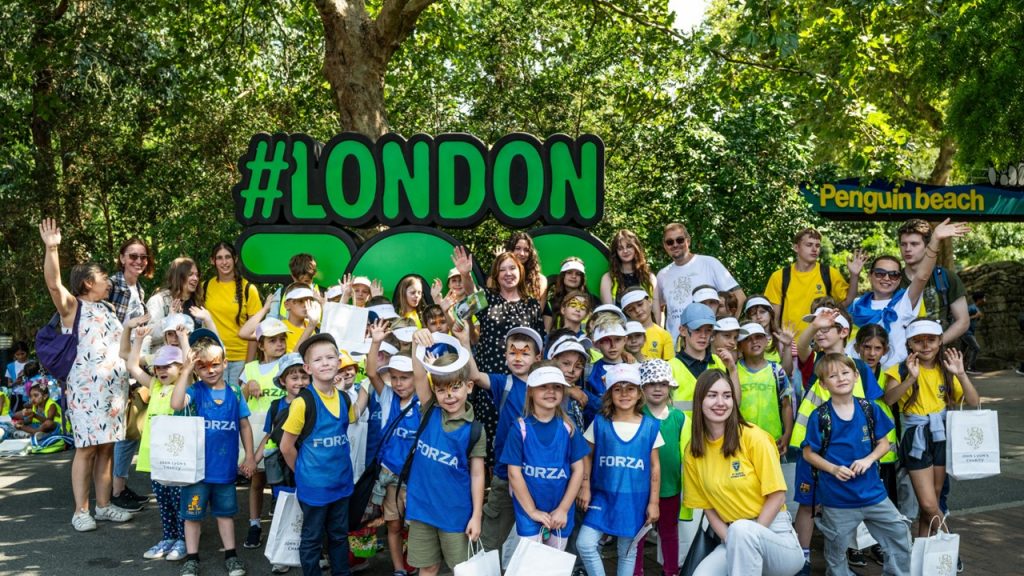
Dame Rachel de Souza, Children’s Commissioner for England, with Erik Mesel, Director of Public Policy and Partnerships at John Lyon’s Charity, and pupils from St Mary’s Ukrainian School in front of the #LondonZoo sign.

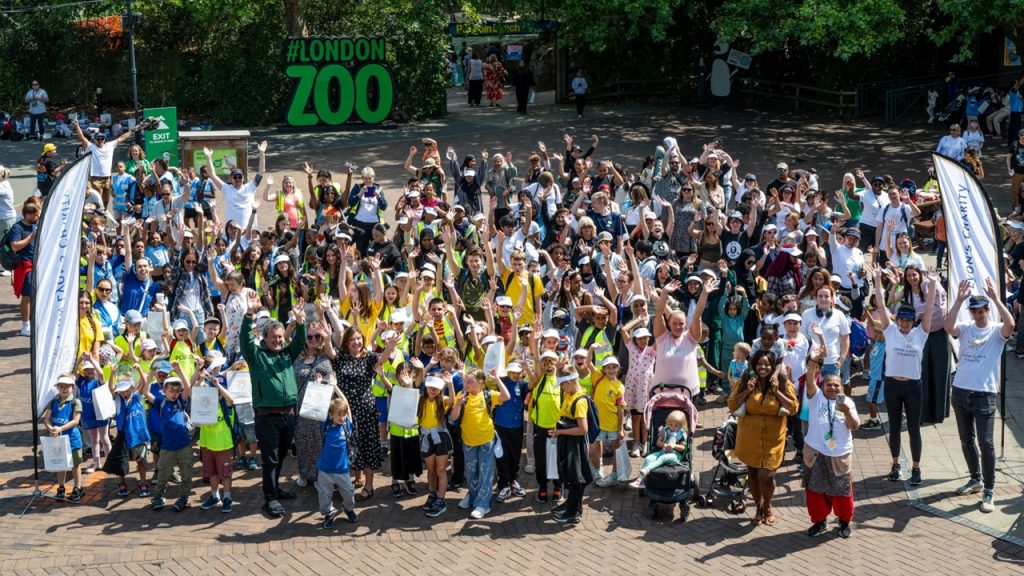
To mark ten years of SHAF and to celebrate National Play Day (6 August), John Lyon’s Charity is giving over 500 children and young people from underserved communities a rare and unforgettable day out at London Zoo. 

For many of these children, it will be their first visit to the zoo. The day, themed as ‘SHAFari’, will include face painting, party entertainers, a special activity pack, and a visit from the Charity’s friendly mascot, John the Lyon. It is designed to provide children not just with fun, but with memories and experiences they would not otherwise have access to. 

Alex, a 14 year old regular of the Pirate Castle, a SHAF-funded organisation based in Camden, said: “From the minute I stepped through The Pirate Castle’s doors for my first Holiday Scheme over six years ago, I felt an immediate sense of warmth and welcoming. Since then, I have learnt loads of new skills, developed many valuable friendships and had so much fun out on the water – as well as training to become a Paddle UK instructor. JLC’s SHAF funding has allowed me to grow not only in paddle sports but also as a person. Thanks to the amazing work they do, places like The Pirate Castle are able to keep running engaging, fun and affordable sessions and provide opportunities for all young people during the school holidays.” 

Children’s Commissioner – Dame Rachel de Souza said: “Childhood is precious and fleeting, so I want every child to have the opportunity to play and have fun. Alongside a safe home and a great education, these are fundamental experiences for every child growing up. With rising costs, too many parents are forced to choose between these things for their families, but no child should miss out on the chance to explore the world around them, meet new people or take up activities. Children from low-income families have spoken to me about the sense of shame that comes from feeling like you’re missing out – that’s why I’m so pleased to be part of this fantastic event at London Zoo celebrating 10 years of creating opportunities for children to just be children.” 

As families continue to struggle under rising costs, John Lyon’s Charity is calling on the Government to close this gap, ensuring no child is needlessly confined within four walls during the holidays. 

Group photo of 500 children who attended SHAFari at London Zoo to celebrate ten years of the School Holiday Activity Fund.

*The research was conducted by Opinion Matters, among a sample of 2001 Nat Rep Respondents (including 1,223 who are parents). The data was collected between 06.06.2025 – 09.06.2025. Opinion Matters abides by and employs members of the Market Research Society and follows the MRS code of conduct and ESOMAR principles. Opinion Matters is also a member of the British Polling Council.