Nick Stuart CB – Chairman of John Lyon’s Charity

Nick Stuart CB – Chairman of John Lyon’s Charity (2002 – 2010)

1942 – 2025 
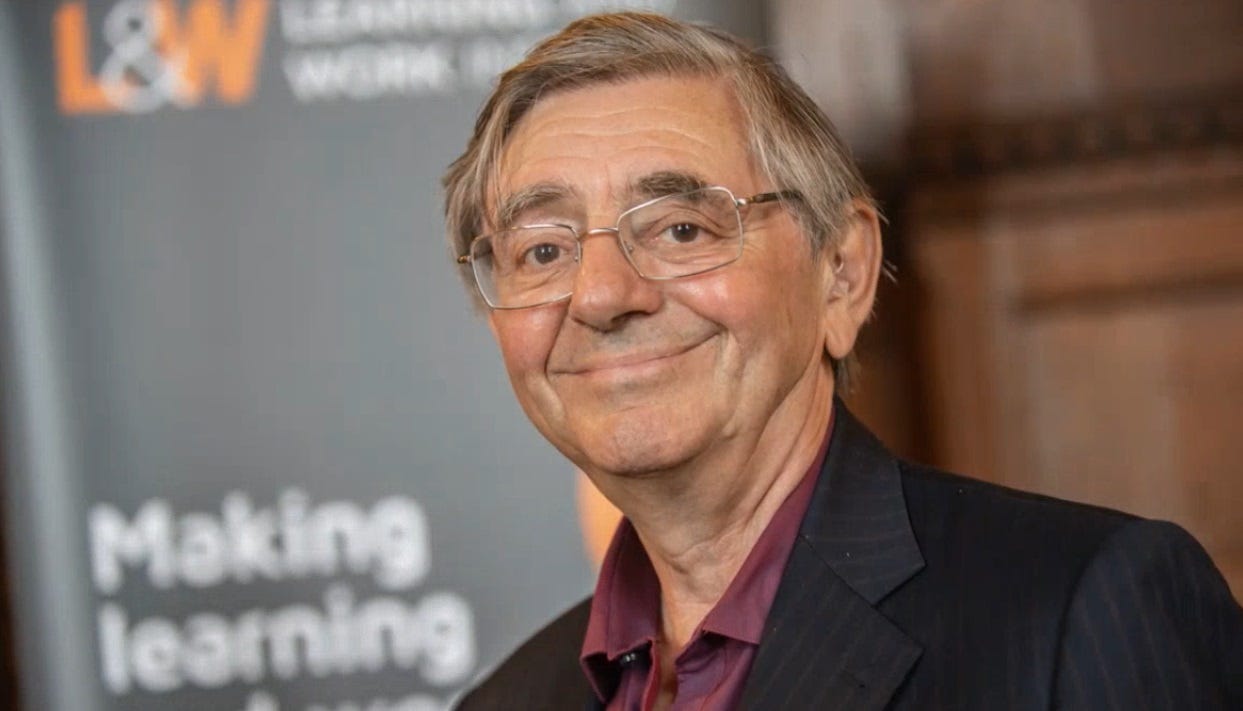
Nick Stuart
Photograph of Nick Stuart. He is an older man with short grey hair, wearing glasses and a dark blazer over a burgundy shirt. He is smiling gently at the camera, with a soft-focus banner and warm indoor lighting in the background.

We are deeply saddened to share that Nick Stuart CB, who served as Chairman of the Grants Committee of John Lyon’s Charity 2002 – 2010 passed away unexpectedly on the 12th of September 2025.   

Nick was a highly respected and much valued member of the John Lyon community, serving with great dedication as both a Foundation Trustee and Governor of Harrow School from 1996-2007. Nick was a devoted husband, father, and grandfather, and we extend our heartfelt condolences to his wife, Sue, and children – Henrietta, Emily and Alex, at this difficult time. 

Harrow was in Nick’s blood, having attended Harrow School in 1956 -1960 and was known for his sporting spirit, particularly in boxing. He carried that dedication and discipline into his role as Governor, where he championed physical education and extracurricular opportunities for all pupils. 

After attending Oxford University, he joined the Department for Education & Science in 1964 and served as Private Secretary to the Minister for the Arts (Jenny Lee) in 1968-69, the Head of the Civil Service (Sir William Armstrong) and to successive Prime Ministers (1973-76).  He also served as an Adviser in the Cabinet of the President of the European Commission (Roy Jenkins) in 1978-80. He was unsurprisingly appointed CB in 1992 for his innovative contribution in this field.   

Nick went on to hold a number of posts as Director General in the Education and Employment Departments between 1987 and 2001, when he retired as Director General for Lifelong Learning.  

During his time at the Department for Education, Nick oversaw some of the most pioneering and well-known education reforms of the day, including piloting the first school league tables. He is credited by many as being the architect of the 1988 education reforms, which introduced a national curriculum and grant-maintained schools as well as abolishing the Inner London Education Authority.   

Given this illustrious career, John Lyon’s Charity was incredibly fortunate that with his connection to Harrow, Nick agreed to serve on the Grants Committee – his tenure as Chairman bore witness to the evolution of the Charity into a grant-making force majeure.  Available income grew from £3million in 2002/03 to over £5million in 2009/10 and Nick oversaw grants made to over 700 separate organisations that supported young people in the Charity’s Beneficial Area.  Utilising both Nick’s skills as a political negotiator and his extensive connections, his period at the helm saw the Charity become increasingly important for each the local authorities within the Beneficial Area, relationships that he felt would position the Charity to have greater impact at a local level.  He stepped down at a time when leaders of these local authorities increasingly recognised the value and importance of support from John Lyon’s Charity for the voluntary sector in their areas.  Given Nick’s links with the political establishment, he was particularly proud that John Lyon’s Charity had garnered such strong and fruitful relationships with the statutory sector, which have served us extremely well over the years and remain an integral partner with the Charity in our local boroughs.   

Nick was a passionate believer in the value and importance of helping young people to take up activities and opportunities that they would not normally have access to, broadening their horizons and encouraging them to ‘aim higher’.  He took this very seriously and particularly championed the Arts as a way of enriching children’s lives.  He particularly liked to encourage the plethora of world class Arts institutions based within the Charity’s Beneficial Area to engage with local children who would not ordinarily have access to their work.  Nick was particularly proud of the John Lyon Access to the Arts Fund that launched in 2009, which was the forerunner of today’s Cultural Capital Fund– a fund that has enabled thousands of children across the Beneficial Area to access high quality Arts activities that they would not have otherwise experienced.  Given this commitment, it was no surprise when Nick volunteered to become one of the first trustees of the newly established Primary Shakespeare Company in 2014, which brings Shakespeare into primary schools and encourages them to use his works as inspiration across a whole term of learning.  

As well as having a pivotal role in the development of John Lyon’s Charity, Nick was extremely active in public service following his retirement in 2001 including sitting on the QCA board, Chair of NIACE, (National Institute of Adult Continuing Education), Chair of the Specialist Schools and Academies Trust (SSAT), trustee of the Girls’ Day School Trust and board member of the Children and Family Court Advisory and Support Service (CAFCASS).     

Nick’s legacy lives on in the opportunities his work helped create for young people, and in the enduring partnerships he fostered between schools, charities, and local communities. As we reflect on Nick’s eight years leading John Lyon’s Charity, his words in the Foreword of his final Annual Report resonate with beautiful poignancy: 

“I pass on my Chairmanship secure in the knowledge that the Charity will continue moving steadily forward, positively impacting the lives of young Londoners.” 

His words now serve as both a reflection of all he achieved and an inspiration for the work that continues in his name. 
Our Response to the Leasehold Reform Ruling

October 2025

We are disappointed by the decision that John Lyon’s Charity has not been granted an exemption when others in the charitable sector have. While we support the principle of leasehold reform, this ruling has implications for how the Charity generates income.  

Please be assured that our commitment to funding vital grassroots services for children and young people remains unchanged. We are carefully reviewing the impact of this judgment and considering next steps to ensure we can continue to deliver on our mission. 

If you would like to find out more about the case and our stance on leasehold reform, please click here.

STARVED OF PLAY

ACTIVITY HUNGER CRISIS LEAVES MILLIONS OF CHILDREN MISSING OUT 

With school summer holiday under way, new research shows that more than 40% of parents agree that both holiday hunger (42%) and activity hunger (44%) are major challenges during school breaks. 

The research also highlights how almost half of UK children missed out on paid play activities over May half term (2025), with parents warning of an escalating ‘activity hunger’ crisis impacting on children and young people’s mental health and wellbeing.   Evidence suggests that parents are finding it difficult to access the Government’s Holiday Activities and Food (HAF) programme, with a staggering 56% of parents believing the Government must do more to make school holiday activities affordable and accessible for all families.  

Leading grant-maker, John Lyon’s Charity is concerned that too many children from low-income families are missing out on enriching experiences during the school holidays due to financial constraints, and warns that lack of access to both food and stimulating activities risks isolating children harming both their physical and mental wellbeing.   

John Lyon’s Charity identified this growing need ten years ago, and in response, created the School Holiday Activity Fund (SHAF). Since its launch in 2015, the Charity has awarded more than 1,000 SHAF grants at a cost of over £4 million to hundreds of grassroots organisations across North and West London.  Grants have been used to deliver fun and accessible activities for children and young people during the school holidays – providing a lifeline for children and parents alike. 

Anna Hoddinott, Grants Director at John Lyon’s Charity, said:We have found that, tragically, 3 in 10 parents often feel they must choose between providing food or activities for their children, due to financial pressures.  Providing food for your children has to take priority but they also need play, social interaction, and new experiences. We created SHAF to bridge that gap and give every child, regardless of their background, a chance to enjoy their holidays.” 

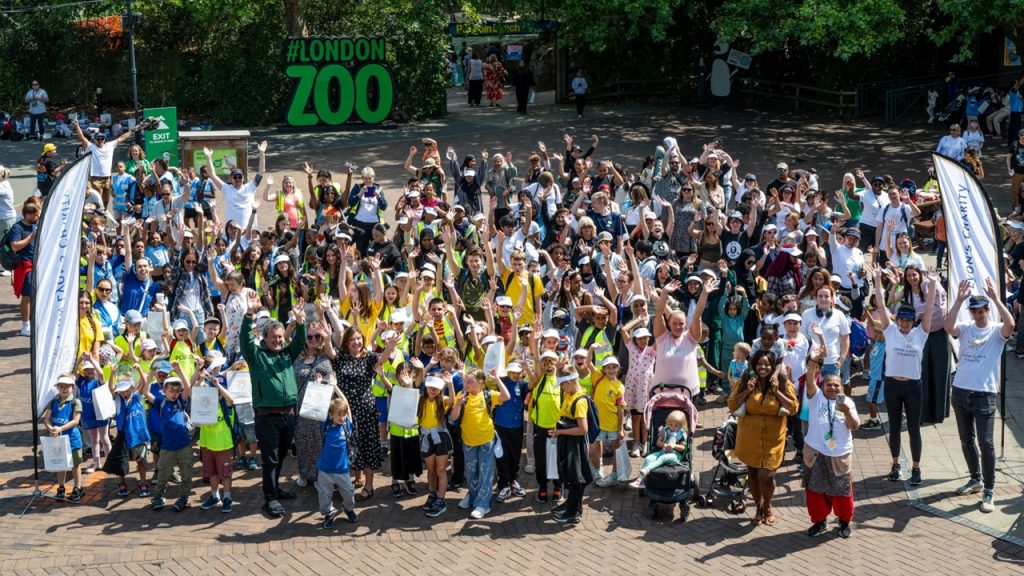
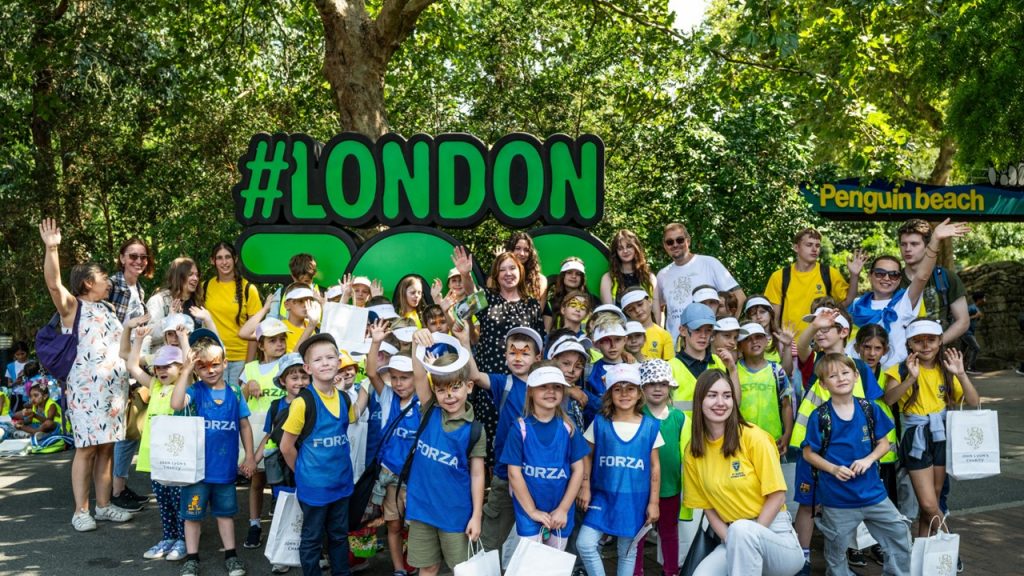
Dame Rachel de Souza, Children’s Commissioner for England, with Erik Mesel, Director of Public Policy and Partnerships at John Lyon’s Charity, and pupils from St Mary’s Ukrainian School in front of the #LondonZoo sign.

To mark ten years of SHAF and to celebrate National Play Day (6 August), John Lyon’s Charity is giving over 500 children and young people from underserved communities a rare and unforgettable day out at London Zoo. 

For many of these children, it will be their first visit to the zoo. The day, themed as ‘SHAFari’, will include face painting, party entertainers, a special activity pack, and a visit from the Charity’s friendly mascot, John the Lyon. It is designed to provide children not just with fun, but with memories and experiences they would not otherwise have access to. 

Alex, a 14 year old regular of the Pirate Castle, a SHAF-funded organisation based in Camden, said:From the minute I stepped through The Pirate Castle’s doors for my first Holiday Scheme over six years ago, I felt an immediate sense of warmth and welcoming. Since then, I have learnt loads of new skills, developed many valuable friendships and had so much fun out on the water – as well as training to become a Paddle UK instructor. JLC’s SHAF funding has allowed me to grow not only in paddle sports but also as a person. Thanks to the amazing work they do, places like The Pirate Castle are able to keep running engaging, fun and affordable sessions and provide opportunities for all young people during the school holidays.” 

Children’s Commissioner – Dame Rachel de Souza said: Childhood is precious and fleeting, so I want every child to have the opportunity to play and have fun. Alongside a safe home and a great education, these are fundamental experiences for every child growing up. With rising costs, too many parents are forced to choose between these things for their families, but no child should miss out on the chance to explore the world around them, meet new people or take up activities. Children from low-income families have spoken to me about the sense of shame that comes from feeling like you’re missing out – that’s why I’m so pleased to be part of this fantastic event at London Zoo celebrating 10 years of creating opportunities for children to just be children.” 

As families continue to struggle under rising costs, John Lyon’s Charity is calling on the Government to close this gap, ensuring no child is needlessly confined within four walls during the holidays. 

Group photo of 500 children who attended SHAFari at London Zoo to celebrate ten years of the School Holiday Activity Fund.

*The research was conducted by Opinion Matters, among a sample of 2001 Nat Rep Respondents (including 1,223 who are parents). The data was collected between 06.06.2025 – 09.06.2025. Opinion Matters abides by and employs members of the Market Research Society and follows the MRS code of conduct and ESOMAR principles. Opinion Matters is also a member of the British Polling Council.

Our Continued Response to the Leasehold Reform Debate

We are aware of continued commentary surrounding John Lyon’s Charity and our stance on leasehold reform. We want to take this opportunity to clarify a few key points and address some of the criticisms directed at our work.

First and foremost, we are a grant-making charity committed to improving the lives of children and young people (CYP) across nine London boroughs. Each year, our funding supports grassroots organisations delivering vital services to thousands of CYP. Yes, we do measure and understand the impact of our grant-making. This is not only a core part of our work but essential to ensuring our funding is genuinely making a difference.

Each year:

The Charity funds over 400 active grants, supporting a wide range of programmes including youth clubs, emotional wellbeing programmes, inclusive arts activities, supplementary schools and more.

At least 250 organisations are currently in grant with JLC, reaching approx. 160,000 CYP.

We support around 1,300 grassroots organisations through our locally-established Young People Foundations (YPFs) – now the second-largest funders of youth services in many boroughs, after JLC itself.

We fund £500,000 annually in holiday programmes to ensure disadvantaged children have access to food, enrichment, and play during school breaks.

Through our Cultural Capital Fund, nearly 80,000 children (representing 25% of the local youth population) have engaged with arts and creativity post-pandemic.

We responded swiftly to crises including leading the sector-wide Grenfell Tower and COVID-19 responses, resulting in over £40 million in collaborative CYP funding distributed across London.

Our £22 million Recovery Strategy, launched in 2020, continues to address pandemic-linked inequalities affecting the most vulnerable children and young people.

Without our continued ability to fund this work, real gaps will emerge and in many cases, local authorities no longer have the capacity to step in.

Our approach is highly strategic and every grant is made with long-term sustainability in mind, supporting organisations that deliver transformational work for children and young people in North and West London. Currently, we distribute between £12 to £15 million per year in grants. This level of funding has been achieved through a clear five-year strategic plan that focuses on longer, larger grants, as well as a carefully planned six-year COVID recovery strategy, which saw us take an additional £22 million out of our endowment to augment our annual spend, to protect vital community organisations and the children they serve during an exceptionally difficult period.

That additional level of funding is now coming to an end. Even before this legislation, we were preparing for our annual grant-making to return to around £12 million – a challenge in itself given the growing need. If the Leasehold and Freehold Reform Act passes without exemption for our charity, we anticipate that our grant-making will drop to around £10 million per year, a significant drop from the current £15million.

We are not a fundraising organisation and never have been. Our ability to continue our work depends entirely on the careful management of our endowment, including the historic property assets left to the Charity to fund our mission. Maximising these assets is key to ensuring we can maintain and grow our grant-making in the face of increasing need.

The £1.37 million figure recently mentioned is a conservative estimate. The Leasehold and Freehold Reform Act 2024 will impact both the value of our estate, which is essential to our total return investment model, and the income we receive from lease extension premiums. This creates a double financial impact – reducing both our capital base and our annual income, and ultimately means we will have less to invest in the communities and young people we serve.

It is also important to acknowledge the wider consequences. This isn’t just about lost grants, it risks lost jobs in the charity and community sector, lost services for children, and lost progress for communities that already face inequality.

And while £10 million may sound like a substantial amount of funding, the reality is that we are already unable to meet the growing demand. With other funders reducing or reshaping their own grant-making programmes, we are seeing a surge in applications to John Lyon’s Charity. Simply put, more organisations are turning to us – and with fewer resources, every pound we give becomes even more critical.

Once again, we are in support of leasehold reform and agree with the need to make the system fairer. However, our legal challenge is focused on securing a narrow exemption that relates specifically to our properties in St John’s Wood – not to block reform altogether.

There have been claims that no charities should be exempt, but we cannot and should not be lumped into the same category as wealthy second-home owners or commercial investors. Our charitable work benefits thousands of children and young people every year, just as the work of organisations like the Crown Estate, the National Trust, and the Duchies of Lancaster and Cornwall – all of whom currently have exemptions – benefits the public in other ways. We are not a rich organisation operating out of greed. We are a charity built over 34 years, trusted by communities, and committed to protecting essential grassroots services across North and West London.

We respect those who hold a different view, including leaseholder campaigners, and have never sought to discredit their position. All we ask is that our position is also treated with the same respect.

The Charity’s Stance on Leasehold Reform

12th July 2025

We understand completely how many people are negatively affected by the current Leasehold system. However, all freeholders are NOT the same. John Lyon’s Charity is not campaigning at the 11th hour, or on a whim. We have been supportive of the majority of reforms, giving substantial written support and other positive suggestions since the Law Commission’s original report in 2018.

To be clear: John Lyon’s Charity is not opposing leasehold reform. We fully support the principle and have worked constructively with governments over the years to help make the system simpler and fairer for leaseholders. What we are doing is asking for a narrow and reasonable exemption for us. We are a charity that happens to have a historic estate. We rely on historic property endowments to fund vital work with children and young people. Our estate is in St John’s Wood. Our analysis shows that 90 per cent of our leaseholders are commercial investors and or/non doms. They are not poor or needy and they are not naïve leaseholders. This would be a transfer of wealth from a funder whose only rationale for being is to fund children and young people’s charities.

The Leasehold and Freehold Reform Act 2024 does not currently recognise the unique position of such charities, even though exemptions have been made for organisations like the Crown Estate, the National Trust, and the Duchies of Lancaster and Cornwall. The financial impact of this law would redirect millions from a children’s charity into private wealth – significantly reducing what we can provide to the thousands of young people we support each year.

Many of the charities we support are grass roots community charities. We are facing unparallelled demand for our funding and are already digging deeper into our endowment to fund this demand. A reduction in enfranchisement income will lead to us cutting grants, which will lead to job cuts in the sector we fund.

Our legal challenge is about protecting that future. It is only right that we stand firm in our responsibility to safeguard their long-term interests. To find out more about our stance on leasehold reform, please read our latest blog from our CEO, Lynne Guyton here.

Harrow Children’s University Celebrates Milestone

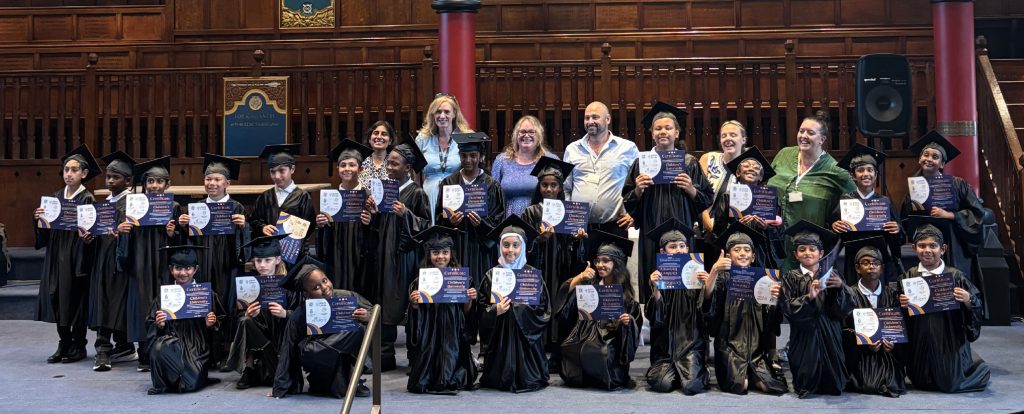
The university celebrates a first year with over 200 local pupils graduating

Harrow Children’s University (HCU) proudly celebrates a highly successful first year, marked by two graduation ceremonies honouring the achievements of more than 200 primary school pupils. Launched through a unique partnership between John Lyon’s Foundation (John Lyon’s Charity,  The John Lyon School and Harrow School), and Young Harrow Foundation, this impactful programme is opening up new opportunities for children across Harrow.

HCU was established in 2024 to tackle the low engagement of schools in Harrow seeking funding for arts activities from John Lyon’s Charity via its Home-School-CommunityCultural Capital Fund. By uniting the strengths and resources of John Lyon’s Foundation and Young Harrow Foundation, the initiative has connected schools with a wide range of local services and enrichment opportunities, giving pupils access to exciting, high-quality learning experiences outside the classroom.

Building on the success of similar initiatives funded by John Lyon’s Charity in Ealing and Westminster, Harrow Children’s University is part of a growing movement to ensure all children, regardless of background, can benefit from meaningful extracurricular learning. Research shows that access to these activities significantly improves academic attainment, confidence, and mental wellbeing. Yet for many families, especially those facing financial hardship, such opportunities remain out of reach. A report from the Campaign for Learning[1] revealed that nearly half of children are missing out on out-of-school trips due to the rising cost-of-living, with those from disadvantaged backgrounds three times more likely to be excluded.

Locally, the picture is equally concerning. The HAY (How Are You, Harrow?) survey, which gathered insights from over 6,800 young people across 29 schools, found that:

  • 1 in 5 primary pupils worried about running out of food.
  • 76% reported feeling anxious or nervous.
  • 65% said they often felt down or depressed.
  • Cost was a major barrier to participating in sports and other enrichment activities.

Perhaps most strikingly, only half of young people surveyed said they felt hopeful about their future, underscoring the urgent need for projects like Children’s University.

Through Harrow Children’s University, children take part in enriching learning experiences beyond the school day, including after-school clubs, university and museum visits, and social action projects. Their achievements are recorded in personalised “passports,” and once they complete a set number of learning hours, they graduate in a special ceremony that celebrates their hard work and commitment.

This year, The John Lyon School played a vital role in supporting three Harrow primary schools (Welldon Park Academy, Grange Primary and St Bernadette’s Primary), the first schools to join the programme, by offering volunteer support to help children log their learning hours. Harrow School also played an active role, enhancing the Children’s University offer through Drama and Music workshops, film screenings, and other creative initiatives.  Overall, an incredible 36,213.35 hours of enrichment activities have been logged by 420 children in Harrow, opportunities they would not have had without the Children’s University.  John Lyon’s Charity is proud of this joint initiative that has harnessed the resources of John Lyon’s Foundation to benefit local children and young people in Harrow. 

With thriving programmes now established in Westminster, Ealing, and Harrow, John Lyon’s Charity encourages schools, community organisations and local authorities across its Beneficial Area to explore how the Children’s University model can benefit their communities. To learn more about John Lyon’s Charity and its funding opportunities, please click here. If you are interested in bringing the Children’s University model to your area, click here to find out more.

[1] Almost half of children missing out on learning outside of school due to cost-of-living pressures

The £22M Lifeline Rebuilding London’s CYP Sector Post-Covid

As the UK marks five years since the first Covid-19 lockdown, John Lyon’s Charity, London’s leading independent Children and Young People funder, lays bare the scale of its emergency response and unwavering commitment to the Children and Young People (CYP) sector. Faced with the catastrophic impact of the pandemic, the Charity took an unprecedented step—allocating £22 million from its endowment over six years to shield vital grassroots organisations from collapse. This is in addition to the Charity’s annual grant-giving of £12 million.    

To date, over £18 million has been deployed, with the final £4 million set to be committed within the next year. It was the Charity’s mission to provide long-term funding for vulnerable organisations to ensure they survive the eye of the Covid storm.  

From the outset of the crisis, John Lyon’s Charity moved decisively. In April 2020, it became one of the first funders to step up, pledging £1 million to the London Community Response Fund, coordinated by London Funders, to keep critical services afloat during lockdown. But this was just the beginning. 

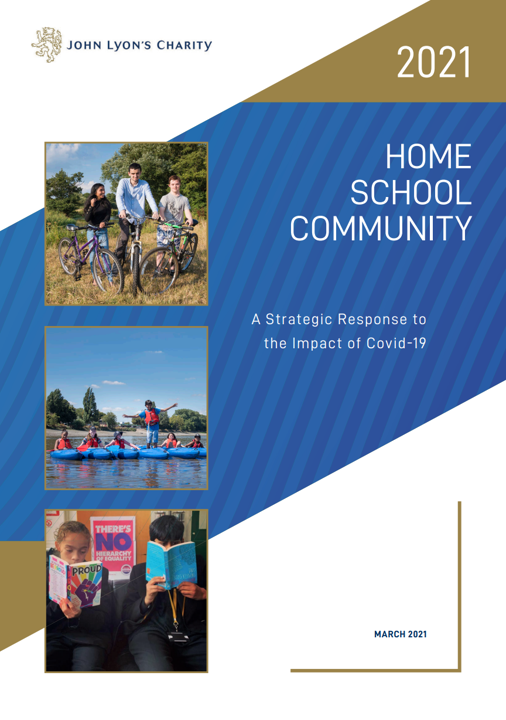
Recognising the need for a long-term strategic vision, John Lyon’s Charity launched the Home-School-Community (HSC) initiative in 2021, that was designed to help sustain grassroots organisations and future-proof the CYP sector against mounting challenges. This initiative has been invaluable, enabling organisations not just to survive but to evolve, innovate, and continue supporting vulnerable children and young people in a post-pandemic landscape. 

“Covid-19 changed the world overnight, and the impact on the CYP voluntary sector was brutal,” said Lynne Guyton, CEO of John Lyon’s Charity. “We knew that if we didn’t act fast, critical services would vanish. Within weeks, we committed £1 million in emergency funding to stabilise the sector. But we also knew short-term fixes weren’t enough—we had to take a long-term view to safeguard these essential organisations for years to come.” 

The Home-School-Community initiative is helping to keep youth centres open, is supporting children struggling with education and helping families crushed by the Cost-of-Living crisis; by designing a very thorough programme incorporating not only recovery but innovation, John Lyon’s Charity has gone beyond emergency relief, securing a sustainable future for the sector.  

Niamh Graham, Deputy CEO of Young K&C said: “Off the back of this HSC funding, we’ve seen smaller organisations being able to give better support to their staff, being able to provide more training, and ultimately, we’re seeing better results for children and young people. We are aware of the challenges that our organisations face when accessing bigger funds, so we really see this as a stepping stone for them to become more confident and drive their organisations further forward.” 

Five years on, the Charity now enters the final phase of its six-year Covid-19 response strategy and its focus still remains clear: ensuring the CYP sector is not only protected but strengthened for the future. John Lyon’s Charity is determined to keep pushing forward, evolving its grant-giving strategy to safeguard London’s most vulnerable children and young people—now and for generations to come. 

As we enter the final phase of our Covid-19 response, we urge organisations to connect with us, apply for grants, and be part of this collective effort to safeguard London’s young people. To find out more about the Charity’s funding opportunities, please visit www.jlc.london.